Want to Nightclub at 80?
NEUROLETTER #33 | JANUARY 2026
Thanks for joining me and as always please share with someone whose brain is curious to learn more.
Just before the Christmas break a senior leader said to me quietly at the end of a cognitive team session,
“I don’t feel like I’m losing my edge… but I don’t feel like I’m using it either.”
They weren’t burnt out. They weren’t disengaged. They were simply living inside a brain that had changed and nobody had ever explained how.
Most of the leaders I work with aren’t trying to be better versions of their thirty-year-old selves. They’re trying to make sense of why the same drive, patterns and habits don’t work in quite the same way anymore.
They want to do things that fit with who they are now. They need to know – nothing is wrong.
Their brain is not declining – it’s transitioning.
This Neuroletter is about giving you a new way to understand that shift, so you can stop fighting your brain and start building Brain Capital, the renewable asset that will quietly determine the quality of every decision you make this year.
Let me show you how in 5 simple, evidenced steps, because the brain you want at 50+ isn’t the brain you had at 30, and that’s a very good thing.
These insights come from my ongoing analysis of peer-reviewed neuroscience, brain-ageing research, and leadership studies, which I track and synthesise using LLM tools, alongside academic journals and global research networks with more than a dash of critical thinking!
1️. Brain Capital Is the New Competitive Edge for all of us.
Brain Capital is your organisation’s most powerful renewable asset. It blends:
Brain health and neurodiversity
Cognitive capability (creativity, judgement, strategic clarity & thinking)
Emotional, social and hybrid intelligence
The brain doesn’t develop in a straight line. It moves through structural eras, with meaningful transitions around ages 9, 32, 66 and 83.
At around 32 we reach peak neural efficiency, followed by a long, stable cognitive plateau, but that’s not the end of growth. Far from it our cognitive abilities grow stronger in fact, yes honestly!
For women especially, midlife is often misunderstood. Shifts during perimenopause and menopause can feel like fog and slowdown but neurobiology shows this is often a rewiring phase, not a decline. New gene expression and network patterns emerge that support deeper strategic thinking and emotional insight - if we give the brain the support it needs.
You’re not losing capability. You’re transitioning into a different kind of cognitive strength.
2️. Protect the Brain’s Superhighways, Energy Stations and Sleep Cycles
The brain runs on energy and clearance systems:
Mitochondria produce ATP - the brain’s energy currency.
The glymphatic system cleans neural waste but only during deep sleep.
Deep, consistent rest is not an indulgence. It is infrastructure for resilience, memory and strategic clarity.
This matters too for social connection: poor sleep makes social engagement feel harder, and we now know that strong social connection is independently protective for the aging brain and linked to slower cognitive decline across populations. Regular interaction stimulates memory, reasoning and emotional processing in ways that solitary thinking simply doesn’t.
3️. Reduce Cognitive Friction Before It Reduces You
Task switching, information overload, AI friction and reactive habits push the brain into a threat response.
Sustained cortisol doesn’t just make you tired. It can erode the hippocampus, the region at the heart of learning, memory and perspective.
The antidote is design, not discipline:
Batch decisions
Protect thinking time.
Create cognitive structure around your most demanding work.
This isn’t just the normal productivity methods This is how brains stay sharp and resilient through the decades of complexity.
This is where social life matters: people with richer social lives show better preserved cognitive function and lower risk of dementia compared to those who are isolated. It’s objective social engagement - being part of a community, participating in activities, nurturing friendships that most consistently correlates with healthier ageing brains.
4️. Creativity and Connection Keep the Brain Young - Literally
Engaging in creative activity - music, movement, art, strategy games, shows up on “brain clocks” as a younger biological brain age: more efficient networks, higher plasticity and better cognitive flexibility.
Long-term creative engagement offers the strongest protection, but even short-term practice reshapes neural patterns.
Social connection enhances this further: it's not just being creative in isolation but creating with others that adds richness and joy to the experience, stimulating memory, emotional processing and cognitive flexibility more powerfully than solitary activity alone.
5️. Psychosocial Safety and Compassion Are Biological Resources
Brains under threat don’t innovate. They protect and shut down.
When people work toward shared goals, their brain activity begins to synchronise - two minds starting to think together. That isn’t metaphoric. It’s measurable. This neural synchrony supports collaboration, trust and collective problem solving.
Importantly - psychosocial safety is about the conditions we create around people, while psychological safety is about the experience inside them. One is the environment, the other is the brain’s response to it, and both are biologically inseparable.
Empathy is not guesswork. The brain tracks both what another person feels and how you interpret it. When these pathways align, fear circuits settle, clarity returns and belonging becomes good for wellbeing, and good for performance.
Compassion isn’t soft. It’s a neurobiological stabiliser that preserves and directs focus, strengthens teams, and reduces the hidden cost of threat responses.
A Quick Thought for the Year Ahead
Most leaders track performance. Very few track how their brains function under pressure, in collaboration, and across change.
This is the quiet lens behind the Brains@Work Diagnostic® approach - not to label people, but to help leaders see where cognitive friction, lifestyle, connection and emotional alignment are shaping actual capability.
Because your brain is not in decline. It is entering its next era of resilience, depth and strategic power.
Let’s shape future minds together, get in touch to find out more.
🌈 Shaping Brain Capital from the Very Beginning
While much of my work sits in boardrooms and leadership teams, the real work of Brain Capital doesn’t start in adulthood.
It starts in childhood.
That’s why I created Bertie & Betty: The Brainy Brains of Mindsville® - a story-led series designed to help children understand their brains with curiosity, confidence and kindness.
In Mindsville, feelings are named, questions are welcome, and every brain is different, because emotional literacy, creativity and self-awareness aren’t “soft skills”. They are the foundations of resilience, learning, healthy brains and future leadership.
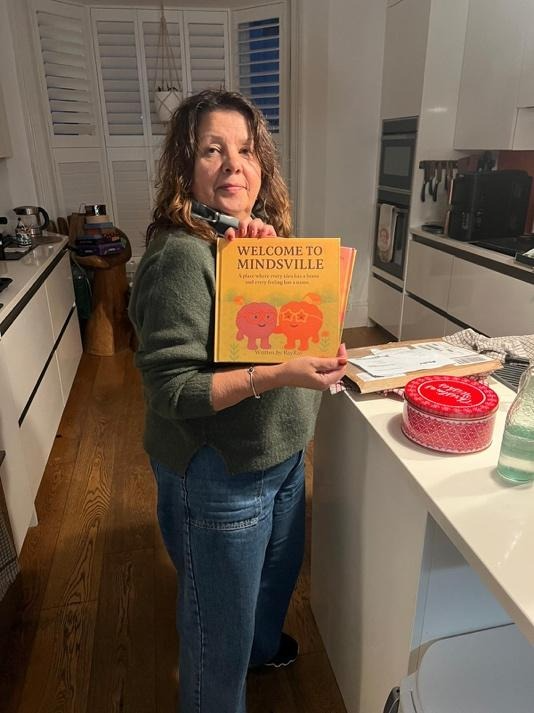
When children learn early that their brain is part of them and something to understand, they grow up protecting it, not pushing it past breaking point.
Brain Capital isn’t built in a quarter. It’s shaped across a lifetime.
And it always begins with a story, for all of us who have ever asked ‘Why am I like this?”.
Let’s shape future minds, together.
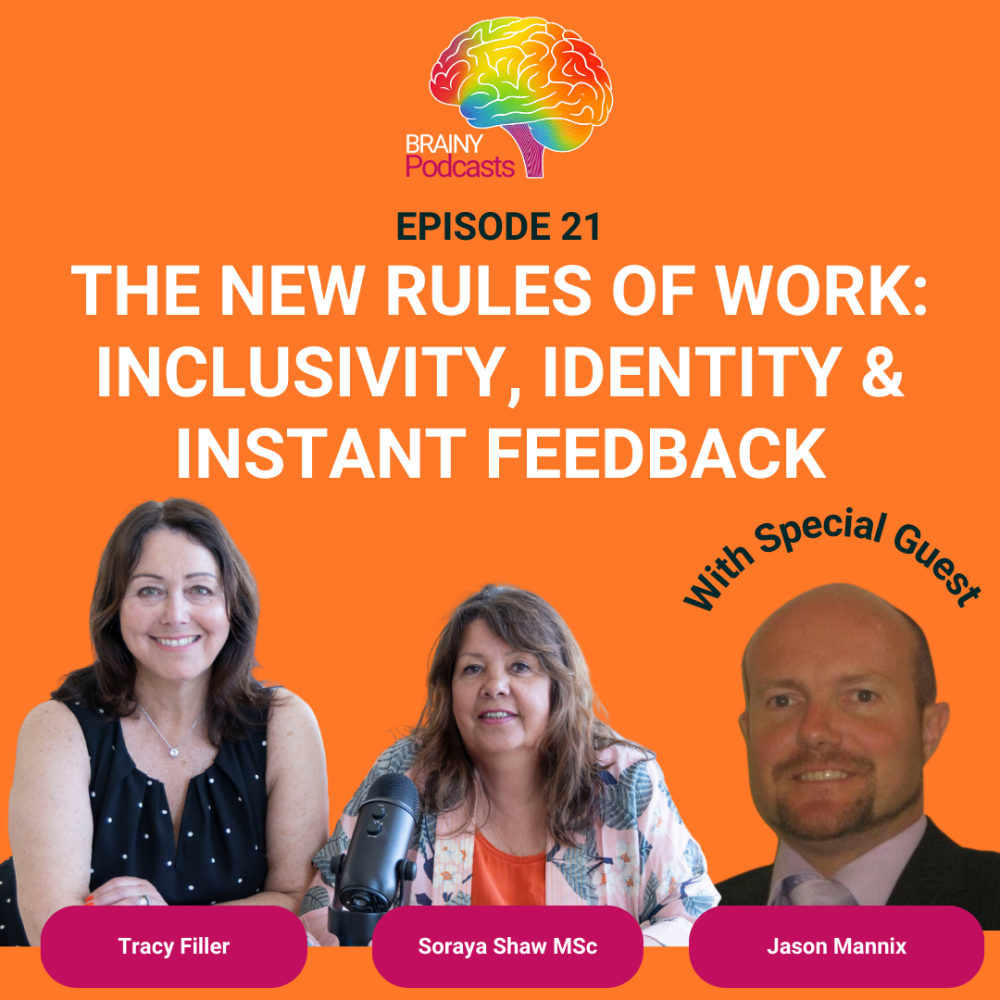
The workplace has changed - dramatically - and leaders who haven’t noticed are already behind.
In episode 21 of Brainy Podcasts, we dive into The New Rules of Work with Jason Mannix, HR lead for the Brighton Pier Group and founder of Mannix Consultancy.
Together, we explore what today’s workforce is telling us loud and clear:
• Inclusivity isn’t an initiative - it’s a daily behaviour.
• Identity shapes how people show up, connect, and feel safe.
• Instant feedback isn’t entitlement - it’s the new operating system.
From Gen Z’s expectations to the rise of workplace anxiety, from brain-friendly onboarding to AI freeing leaders to actually lead - this episode pulls apart the shifts redefining work, leadership, and culture.
If you want to understand what people need now (not 10 years ago), how to genuinely support diverse identities, and why feedback is the glue holding modern teams together… this one’s for you.